Health and Safety Policy — Commercial Waste Chelsea
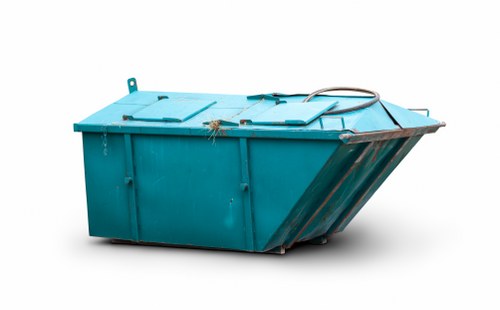 Commercial Waste Chelsea is committed to protecting the health, safety and welfare of all employees, contractors and the public affected by our operations. This policy sets out the framework for managing risks associated with commercial waste collection, disposal and transport within our service network. It applies across our rubbish company service area, waste collection service area and rubbish removal routes and supports a continuous improvement approach to occupational safety.
Scope and Objectives
Our objectives are to prevent injury and ill health, to comply with applicable health and safety obligations, and to reduce the environmental impacts of waste handling. The policy covers routine collection, transfer, vehicle operations, depot activities and any ancillary services. It informs our procedures for safe work, training, reporting, and the selection of suitable equipment for the wider waste management and rubbish clearance service area.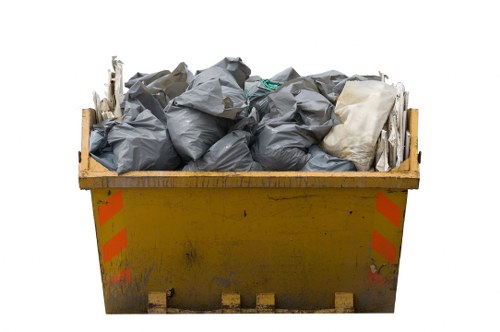 The policy emphasises clear responsibilities, defined safe systems of work, and documented risk assessments for tasks including manual handling of bins, operation of lifting equipment, and segregation of hazardous materials. Key aims include reducing slips, trips and falls, preventing vehicle-related incidents, controlling exposure to biohazardous materials, and ensuring safe interaction with clients and members of the public in the waste collection service area.
Roles and Responsibilities
Senior management will ensure resources are provided to implement this policy, while supervisors are responsible for day-to-day safe operations. Employees must follow safe systems of work and report hazards. Contractors engaged to provide services in our rubbish removal service area are required to meet or exceed our safety standards before commencing work. Everyone has a duty to act responsibly and to stop work where an immediate danger is present.Training, competence and supervision form the backbone of safe operations. We provide induction training for new staff, regular refresher courses, and task-specific training for equipment such as compactors, skip loaders and rear-lift vehicles. Personal protective equipment (PPE) is supplied where risks cannot be adequately controlled by other means and must be worn as required.
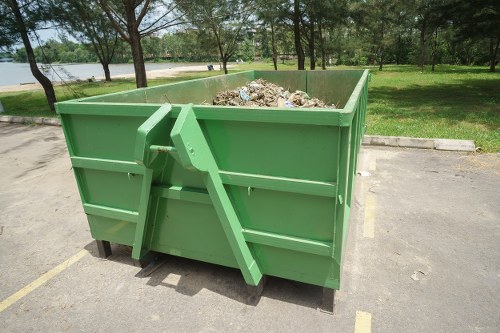 Routine inspections, pre-shift vehicle checks and scheduled maintenance ensure our fleet is safe and roadworthy. Safe loading practices, securement of waste loads, and compliance with load-weight limits are mandatory. The policy also requires that any faults affecting safety are reported immediately and that vehicles are not used until rectified.
Risk assessment is central to our approach. We carry out documented assessments for each activity and location in the rubbish company service area, updating them when conditions change or after an incident. Controls follow the hierarchy of risk control: elimination, substitution, engineering controls, administrative controls and PPE. Control measures are monitored for effectiveness and revised where necessary.
Incident reporting and investigation procedures are established to ensure timely recording and thorough analysis of accidents, near misses and dangerous occurrences. Prompt action is taken to prevent recurrence, and learning is shared across the organisation. Records of incidents, investigations and corrective actions are maintained to demonstrate compliance and enable continuous improvement.
Handling hazardous wastes requires particular care: segregation, labelling, safe containment and documented chain-of-custody procedures are enforced. Employees receive specific guidance on dealing with chemical, clinical and sharp waste, and on the use of spill kits and decontamination processes to protect health and limit contamination in the collection and disposal zones.
 Monitoring, auditing and performance measurement are used to verify compliance with this policy. We set key performance indicators for safety outcomes, conduct periodic safety audits, and review findings at management meetings. Changes in legislation, industry standards and best practice are monitored and reflected in policy and procedure updates to maintain alignment with statutory obligations across our service area.
 Contractors and suppliers engaged by Commercial Waste Chelsea must demonstrate competence and compliance with our safety expectations before and during contract performance. We require written method statements, risk assessments, and evidence of insurance where appropriate. Collaboration and clear communication with third parties are essential to managing safety in multi-operator environments within the broader rubbish collection service area.
We will review this policy at least annually, or sooner if there are significant operational changes, incidents or updates to legal requirements. The review process includes feedback from staff, supervisory observations and audit outcomes. Our commitment is to a safe, healthy and legally compliant workplace that protects people, property and the environments in which we operate. This policy is supported by detailed procedures, training records and operational checklists which collectively enable consistent, safe waste management across our rubbish removal and waste collection service areas.
Implementation of this policy is mandatory for all staff, and adherence is a condition of employment or engagement. Non-compliance will be addressed through corrective action, which may include retraining, disciplinary measures or contract review. By working together and following these principles, Commercial Waste Chelsea aims to maintain high standards of health and safety throughout our rubbish company service area and to protect our workforce and the communities we serve.
