Commercial Waste in Chelsea for organised, compliant business clearance
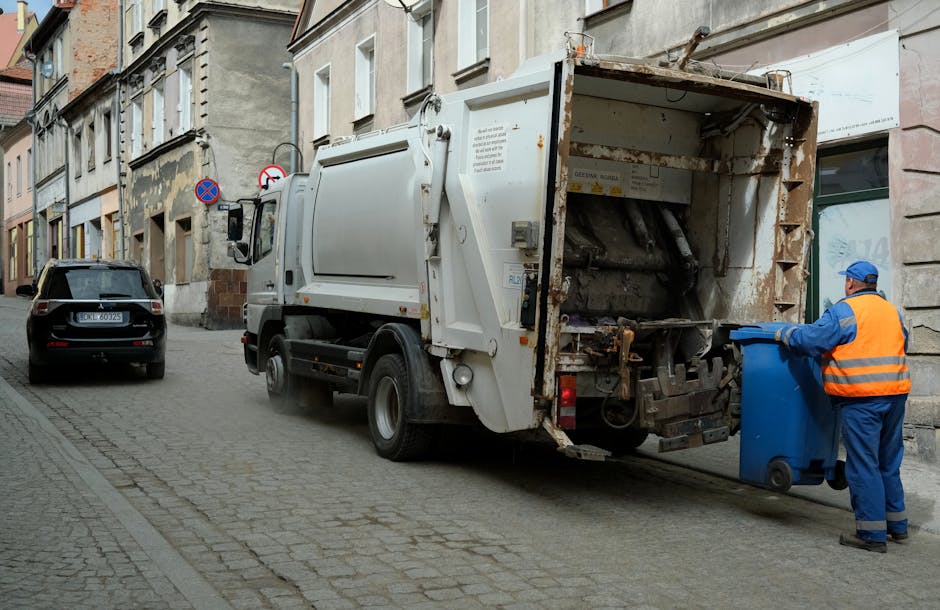
Commercial waste in Chelsea needs a practical, well-structured approach when premises generate mixed refuse, packaging, redundant stock or office items that should not sit around for long. Our service focuses on collecting business waste and moving it into the right disposal or recovery route, with attention to the type of material, how it is handled and what can be separated for recycling. That means the work is not just about removal; it is about making sure the load is dealt with sensibly and in line with the nature of the waste.
Businesses often want a straightforward arrangement that fits around trading hours, building access and the way waste is stored on site. We can help with routine business waste removal and other clearances where a premises has more than one kind of item to move. If you are comparing options, our pricing and quotes information is a useful place to start, and you can ask for a quotation once you have a clear idea of the materials involved and the scale of the job. For a practical next step, set out what needs clearing and when access is easiest.
Because commercial premises vary so much, the best results come from choosing a service that matches the waste stream rather than treating everything as the same job. Office furniture, shelving, packaging, archived paperwork and appliance items all call for slightly different handling, and certain materials may need extra care. If you need to discuss a collection, you can request a quotation after checking what is to be removed and whether anything needs separating first.
Business waste collections planned around the way your premises operate
Commercial waste collections are most effective when they support the working day instead of interrupting it. That can mean clearing a back area before deliveries arrive, removing accumulated refuse after a fit-out, or dealing with an office clearance once a team has moved equipment out. We keep the service centred on the actual contents of the load, so that mixed business waste is assessed properly and handled with an appropriate disposal route rather than being treated as one generic pile.
Where a business has a recurring need, it helps to think through what kind of material is produced most often and how it is stored. Lightweight packaging, broken chairs, unwanted desks, old filing units and general rubbish all behave differently when loaded and transported. If you need more detail on the wider set of services, the waste removal page gives a broader view, while office clearance is more specific when the job is tied to desks, cabinets, monitors or other workplace items. A concise list of items is often enough to start the process.
- General commercial rubbish from offices and shared premises
- Workplace furniture and redundant fittings
- Mixed items from storage rooms, stock areas and back-of-house spaces
- Loads that may include recyclable and non-recyclable material
Office, furniture and equipment clearances

Office-related commercial waste often includes items that still look usable but no longer suit the space or the way the business works. Desks, chairs, storage units, small electricals and general fit-out leftovers may all need to be moved together, and it is usually better to plan the collection around access points and lifting needs. We can handle furniture clearance where the main task is to remove bulky workplace items without leaving the premises cluttered or blocked for staff.
Some workplaces also need more targeted disposal for individual item types. If the job includes heavy seating or domestic-style furnishings from a business setting, mattress and sofa disposal may be relevant for those particular pieces, while fridge and appliance removal is useful where staff kitchens, hospitality areas or storage rooms contain unwanted appliances. These pages are helpful when the waste is not simply general rubbish but a specific item category with its own handling needs.
Good preparation keeps office and furniture work efficient without overcomplicating the booking. If you can identify which rooms are involved, whether items are upstairs or in a service yard, and whether anything is fixed in place, that gives a clearer picture of the task. Photographs can also help when a business wants a precise quotation, especially if there are awkward access points or a mix of bulky and light items. Keep the description focused on the actual contents rather than trying to make every detail sound larger than it is.
Specialist disposal for items that need extra care
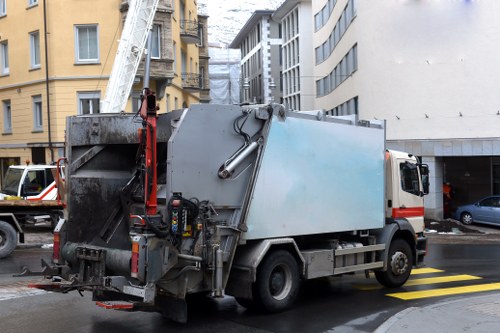
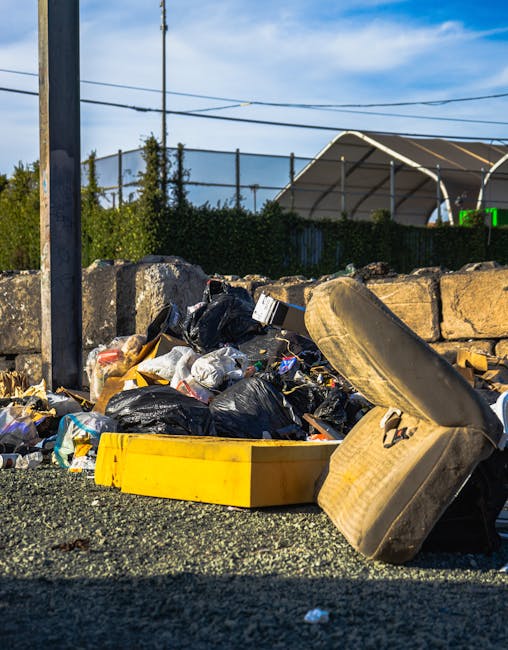
Not every commercial waste job is simply about lifting and loading. Some materials are better dealt with separately because of their size, composition or the way they need to be transported. That can include broken appliances, confidential material, or items that may contain components requiring more careful sorting. A thoughtful approach reduces the chance of mixing unsuitable materials together and makes it easier to direct each part of the load to the right route.
For business premises with paper records or sensitive office material, confidential shredding can be an important part of the waste plan. Where a site has waste that may be classed as hazardous or needs particular controls, hazardous waste disposal explains the sort of material that should not be folded into a general collection. For details of the principles behind these arrangements, health and safety policy and insurance and safety are useful reference pages.
One practical point is that specialist disposal works best when the material is identified early. If a load contains a single unusual item among standard business waste, it is worth flagging it before the day of collection rather than leaving it as a surprise at loading time. That helps avoid delays and keeps the quotation aligned with the work actually required. In many cases, a short written summary is enough to indicate whether a standard business clearance is suitable or whether part of the load needs separate handling.
Households, flats and other property clearances linked to trade work
Commercial waste activity sometimes overlaps with property clearances where a landlord, letting agent, builder or business owner needs items removed from a domestic-style setting. That can include flats, houses, lofts, garages and home contents where the task is not a general retail or office clearance but a property-based removal. These jobs are still assessed by the type of waste and the access conditions, so the focus remains on what needs taking away and how it should be managed.
If your enquiry involves a property rather than a workplace, the relevant pages may be flat clearance, house clearance, loft clearance or garage clearance. Each of these points to a different setting, and that distinction matters because access, stairways, item size and loading arrangements can vary considerably. Where waste comes from a broader domestic clear-out, home clearance may be the better starting point.
These related services are useful when a commercial client is dealing with a property portfolio, end-of-tenancy contents or an inherited space that contains mixed items. Rather than assuming every job is the same, it is better to match the service to the setting and then describe the contents clearly. That gives a cleaner quotation process and helps identify whether there are furniture pieces, general rubbish or items that require separate handling.
Building, garden and site-related waste from operational premises

Some commercial waste arises not from day-to-day office activity but from upkeep, refurbishment or outdoor work. Shops, managed buildings, hospitality spaces and business yards can all generate waste that is more practical to clear in one organised load than in several small movements. The aim is to remove the material safely and leave the area ready for the next stage of work, whether that is reopening a room, restoring access or tidying a service area.
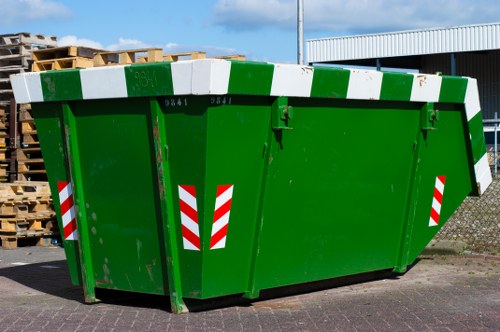
Where the job includes rubble, timber, packaging or stripped-out fixtures, builders waste clearance is the most relevant page. If the waste is mainly green material, branches, soil or prunings from managed grounds, garden clearance is the better fit. The distinction matters because construction residue and garden debris are not the same, even when they appear together on a site. For a broader look at items suitable for standard disposal routes, what can go in a skip offers a useful comparison point.
When a site mixes several waste types, it is usually best to separate what can be reused or recycled from what must be disposed of as residual waste. This is especially true where packaging, broken fittings, soil, timber and bulky household-like items appear in the same place. A careful first look at the load avoids unnecessary handling and helps keep the collection well organised. Clear information up front is especially helpful for work that sits between commercial and domestic categories.
Understanding waste types, recycling and the quotation process
Commercial waste quotes are usually clearer when the material is described by type rather than by guesswork. General rubbish, mixed office furniture, electricals, confidential paper, building residue and appliances each suggest different handling requirements. The more accurately the contents are described, the easier it is to set expectations around loading, sorting and disposal. That is one reason why recycling and sustainability can matter even on a straightforward clearance, because not every item should follow the same route.
We also recommend checking whether the waste includes anything that may need special treatment before the collection is booked. For example, a fridge, a sofa or a stack of archived paperwork is not just another general item, and a mixed load may need some separation before it is taken away. If you are comparing page information, about us can give a general overview of the business, while book online is there for those who prefer a direct digital booking route once the service choice is clear. Accuracy at this stage helps keep the quote relevant to the actual work.
A useful quotation request normally includes a brief list of item types, approximate quantities and any practical access notes such as stairs, lifts or restricted loading space. You do not need to write a long explanation; what matters is that the collection can be matched to the right kind of waste service. If there are mixed materials, mention which items are the largest or most awkward, and whether anything should remain on site. That helps ensure the estimate reflects the real job rather than an oversimplified description.
About Chelsea
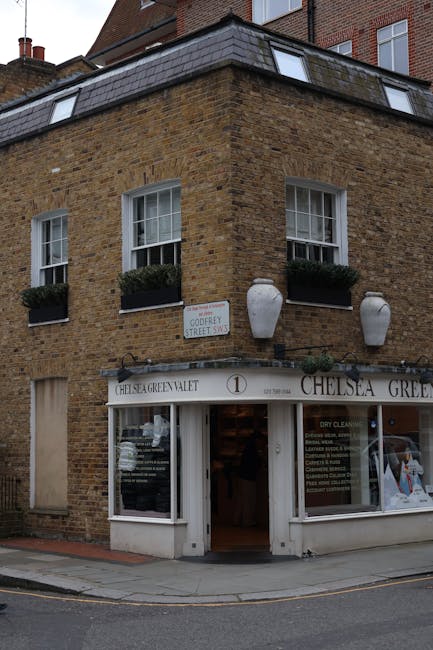
Chelsea is an inner London district on the north bank of the River Thames, within the Royal Borough of Kensington and Chelsea. Historically it developed as a riverside settlement and later became closely associated with the arts, fashion, design and affluent residential streets. One of its most recognisable features is the King’s Road, which helped define the area’s commercial and cultural identity in the twentieth century and remains a major thoroughfare. The district is also home to a concentration of elegant Georgian and Victorian terraces, mansion blocks and garden squares, many of which contribute to its distinctive urban character. Chelsea Physic Garden, established in 1673, is among the area’s best-known historic institutions and provides a long-standing link between the district and botanical study. The river frontage, meanwhile, gives the southern edge of Chelsea a different feel from the interior streets, with views toward Battersea and the wider Thames corridor. Cultural life is reinforced by galleries, theatres and nearby sporting landmarks, including Stamford Bridge, which sits on the western side of Chelsea and is closely identified with the area’s modern identity. Although Chelsea is firmly part of central London’s urban fabric, it still retains pockets of quieter residential space, especially around its garden squares and mews streets, where the layout reflects earlier phases of development. The combination of historic architecture, retail activity, riverside geography and established civic landmarks makes Chelsea a place with a strong local character and a long, visible history.
Commercial waste in Chelsea also benefits from being handled with clear distinctions between the different waste streams a business may produce. Office items, customer-facing furniture, packaging and site waste each need a slightly different approach, and the right arrangement keeps the process straightforward from first description to final collection. If your premises generate a mixture of items, the most useful next step is usually to list the main contents and decide which service page best reflects the work required. When you are ready, ask for a quotation.
Commercial waste handling for regular and one-off clearances
Regular waste arrangements suit businesses that produce a steady amount of refuse and need a predictable way to keep it under control. One-off clearances, by contrast, often arise when a site has a change of use, a refurbishment, a relocation or a stock reset. The underlying principle is the same in both cases: identify the waste properly, remove it in an organised way and direct it to the right disposal route. That makes the service useful for operators who prefer clarity over improvisation.
For recurring workplace needs, it helps to think about the waste pattern over time rather than only the current pile. Some businesses generate mostly light packaging; others produce furniture changes, archive disposal or occasional bulky items. If the waste is tied to a wider premises change, the most relevant pages may be builders waste clearance, office clearance or furniture disposal, depending on the material. If you need a broader starting point, waste removal remains the general service reference.
Useful planning often comes down to three things: what the waste is, where it is located and how it should be moved. If you can answer those questions, the quotation process tends to be much smoother. It also helps to note whether there are items that should stay in place, because a business clearance is often about selective removal rather than emptying every corner. That distinction keeps the job focused and prevents avoidable misunderstanding.
Choosing the right page for your waste type
Different waste categories deserve different descriptions, even when they are all part of the same commercial premises. A business may need help with routine rubbish, but it may also have separate items such as appliances, filing cabinets, furniture or paper records. Matching the enquiry to the right page keeps the request concise and helps ensure the collection is planned around the right materials from the outset. It is often better to be specific than to describe everything as general waste.
If the main issue is office material, furniture or fixtures, the most helpful starting points may be office clearance, furniture clearance or furniture disposal. Where the load includes domestic-style items from a business or managed property, house clearance and flat clearance remain relevant reference pages. For items with a stronger recycling or recovery angle, recycling and sustainability is worth reviewing before sending details.
A final practical point is that a good quotation request should stay focused on the service needed rather than on assumptions about speed, scale or complexity. If the waste is straightforward, say so. If it includes anything unusual, say that too. Then you can request a quotation once you have the essentials ready, and if your job is best described as commercial waste in Chelsea, that simple description is usually enough to begin the conversation.